Showing posts with label shakespeare. Show all posts

Favorites of 2016

Ed Ruscha at the de Young, Seonna Hong at Hashimoto Contemporary,
Yuri on IceAll My Puny Sorrows, The Makropulos Case 


It's no secret that 2016 wasn't great. But here are the pieces of art and entertainment, from an ice skating anime to paintings in Milan, that I loved in this crazy year. 


Books


All My Puny Sorrows by Miriam Toews: One of my favorite books and one of my favorite movies this year are about suicide, but both in an oddly hopeful way. In All My Puny Sorrows, two middle-aged Mennonite sisters - struggling writer Yolandi and renowned pianist Elfreida - grapple with Elfreida's suicidal ideation and their family's long history of mental illness. This sounds like a dreary premise, but Toews's novel is full of warmth, humor, and fierce love. In a highlight, Yolandi furiously gives her sister the kind of defense most depressed people long for, but never get.

Hag-Seed by Margaret Atwood: As a The Tempest superfan, I was excited for Margaret Atwood's novel take on the Shakespeare play. The resulting work, Hag-Seed, is inventive and entertaining (if not terribly deep). When a smarmy board member removes egotistical but dedicated Felix from his role as artistic director of a theatre festival, Felix goes into hiding. But when he finds a job teaching Shakespeare to inmates at a local prison, he realizes how he could have his revenge.

Bloodline by Claudia Gray: Set seven-ish years before Star Wars: The Force Awakens, this eerily topical Star Wars novel captures, from Senator Leia Organa's point of view, the political tensions and escalating disasters that make way for the rise of the First Order.

Imperial Radch Trilogy by Ann Leckie: A spaceship trapped in a human body teams up with a drug-addicted former colleague in a quest for revenge: this is the story Ann Leckie tells in three beautiful page-turners. The trilogy is a masterclass in world-building; a breath-taking tour of imaginary planets, space stations, and cultures. Characters like measured, compassionate, quietly determined Breq; the sometimes heroic, sometimes a hot mess Seivarden; and zany, endlessly curious Translator Zeiat become quick favorites.

After dutifully carrying out a devastating order she wishes she hadn't and then losing her omniscience in a betrayal, former spaceship artificial intelligence system Breq tirelessly plots a course that will take her to the evil leader of the empire she once served. Along the way she gains companions and rights various social justice wrongs. The vision Leckie presents of a compassionate, justice-focused way of governing is enticing and needed, but her didactic impulse can get distracting as the trilogy continues (even on the climactic brink of a potentially existence-ending war, a lot of time and energy is devoted to browbeating an emotionally unstable character over a microaggression, for example).


Older Books I Read or Re-Read
Grace Marks (L), the subject of Atwood's novel

Alias Grace by Margaret Atwood: One of Atwood's finest, Alias Grace is based on real murders that happened near Toronto in 1843. Told by various narrators, newspaper clippings, and even some poetry, Atwood imagines the build-up to the crimes; the lengthy aftermath; and most importantly, the precarious and complicated lives of female servants.

Frankenstein by Mary Shelley: I revisited this classic on a whim, and got a little obsessed. (Bonus: on Halloween, I scored a reduced price ticket to San Francisco Ballet's forthcoming production of a ballet based on the novel!)

The Debacle (Le Debacle) by Emile Zola: Something I'm writing has required me to do a lot of research on the Franco-Prussian War, which lead to Zola's The Debacle. Because of this research I already knew the novel's ending, but I got so invested in the characters involved that I hoped I had misread it. I hadn't. :( The translation I read, by Leonard Tancock, was distracting (he makes the French peasants talk like English cockneys for some reason, like with them saying "tuppence" and everything), but the story of two Frances represented by two men who form an unlikely friendship on the battlefield is still powerful.

Zofloya by Charlotte Dacre and The Castle of Otranto by Horace Walpole: I read Zofloya for the Venetian setting when gearing up for a trip to Venice, and had no idea going in just how bonkers the 1806 Gothic novel would be. It is very bonkers, with murders, affairs, magic, kidnappings, and lovers clasping each other on top of a mountain while lightning flashes around them. But then I went back to what is considered the first Gothic novel, the 1764 The Castle of Otranto, which starts with a teenager getting killed on his wedding day by a giant flying helmet. That definitely takes the bonkers gold. Reading these made me better understand Jane Austen's Northanger Abbey, her 1817 novel in which a teenage heroine who devours these types of books sees Gothic drama in everything around her.


Movies
Arrival

Swiss Army Man: This bizarre, gross-out indie about a depressed man and a corpse is also deeply affecting.

Moonlight: "That shit was perfect," announced a man behind me when the end credits started to roll. It's hard to argue with that assessment of Barry Jenkins's reflective portrait in three acts of a gay boy growing to manhood in Miami's mix of drugs, danger, and beauty.

Arrival: I was a bigger mess during this movie than in 50/50, The Fault in Our Stars, or Liz in September, and cancer wasn't even mentioned. I cried at the beginning of the movie. I cried in the middle of the movie. I cried at the end of the movie. This film about a linguist hired to communicate with recently landed, cephalopod-like aliens is based on the Ted Chiang short story, "The Story of Your Life," and I'd suggest avoiding spoilers.

Hunt for the Wilderpeople: New Zealand director Taika Waititi, unlike many people, presumably had a good 2016. Not only was he filming Thor: Ragnarok, a hopefully lighter addition to the increasingly bogged-down MCU, but his adventure-comedy Hunt for the Wilderpeople was released. When it looks like Ricky - a city-raised foster kid who has finally found home at a rural farm - will be returned to the system, he and his cantankerous foster parent go on the run in the New Zealand bush.

Midnight Special: I am going to be totally honest and admit that I 100% saw this because Adam Driver is in it. He plays an awkward, studious government agent who is tracking down a boy, Alton, rumored to have strange powers. Also looking for the boy are representatives from the cult in which Alton was raised. Michael Shannon and Kirsten Dunst are Alton's parents, and chameleonic Joel Edgerton is a friend helping them flee. Like other artsy sci-fi films Arrival and Under the Skin, Midnight Special spends long moments lingering on its Earthen landscapes, in this case the American South at night. The shots of headlight-filled highways and glowing gas stations reminded me a lot of the Ed Ruscha show held at the de Young this year (below).


TV

Yuri on Ice: I'm not a big TV watcher, but I watched my usual stuff this year: South Park, Gotham, Drunk History, hours of HGTV in the background, etc. But what completely captured my heart (and judging my twitter feed, the hearts of girls from Japan to Mexico)? Ice skating anime Yuri on Ice.


Theater
Morfydd Clark and Janet McTeer in Les Liaisons Dangereuses


Les Liaisons Dangereuses - Donmar Warehouse: Josie Rourke and the Donmar Warehouse are British national treasures we're sometimes allowed access to via National Theatre Live. I loved Rourke's take on Coriolanus a few years back, and her production of Les Liaisons Dangereuses, Pierre Choderlos de Laclos's 1782 novel, was another stunner. (The show eventually made it to Broadway, but I saw it via telecast at the Lark Theater in Larkspur.) My favorite aspect of this production was how Rourke made use of what we know but the characters and Laclos did not: that in just a few years, the upper class's lives of luxurious boredom and bored excess would be upended by the French Revolution. As the play progresses, the sumptuous set is stripped bare, mirroring the protagonists' pretense and foretelling the storm to come. 


Much Ado About Nothing - Cal Shakes: This gender-bending, cater-waiter take on one of my favorite Shakespeare plays worked marvelously. 

King Lear - PacRep: I had no idea what to expect when my family decided to see some local theater while on a trip to Monterey, and was blown away by the caliber of acting and set design in this King Lear

The Makropulos Case - San Francisco Opera: The image of Nadja Michael in a Pierrot costume was enough to get me through the door for this 1926 Czech opera about a 300-year-old superstar looking to further extend her life. Michael's charisma makes the piece work, but I also truly touched by the story of the jaded diva and the everyday people who have been embroiled in a generations-long legal conflict partly of her making. 


Art
Detail from Seonna Hong's "Brotherhood of Men"

Musee Massena - Charlotte Salomon: Vie? Ou theatre?: The Musee Massena in Nice, France, celebrated the work of a young artist who once sought refuge nearby from Nazism.

Palazzo Reale - Simbolismo: When my sister and I stopped in Milan for the night on our way from Nice to Venice, we didn't do much research beforehand and didn't know what to expect. Along with the Duomo and finding the perfect duck umbrella, this exhibition of the beauty, weirdness, and sometimes gaudiness of the Symbolism movement was a highlight.

Fine Arts Museums San FranciscoEd Ruscha and the Great American West & Wild West: Plains to the Pacific: The de Young's Ruscha show focused on the artist's work capturing both the sprawl and emptiness of the American Southwest. Its sister exhibition at the Legion of Honor was a clear-eyed survey of the West through many artists.

Hashimoto Contemporary - Seonna Hong, In Our Nature: I was immediately taken by Hong's intriguing images of youths exploring minimalist landscapes in pinks, greens, and grays. I even ended up buying a 2.5 x 2.5" painting - an addition to my tiny collection of tiny original art.


Ancillary Mercy, Swiss Army Man, Bloodline,
Moonlight, Les Liaisons Dangereuses


Previous Favorites:
Favorites of 2015
Favorites of 2014


Images:
Header and footer collages made in LiveCollage
Grace Marks: Murderpedia 
Les Liaisons Dangereuses: photo by Johann Persson
Seonna Hong: my photo of Hong's painting "Brotherhood of Men"

Dream Cast - The Tempest

Prospero with his magic staff; Miranda riding around the island;
where the bee sucks, there sucks Ariel

The Tempest is one of my favorite Shakespeare plays. I've seen multiple productions and re-read it over and over. I've written more than one poem about it, and the one that's published is about a character who is only mentioned once and probably due to a textual error. I've read W.H. Auden's goddamn The Sea and the Mirror. I also love Margaret Atwood. So I was elated to hear that Hogarth would be publishing her novelized take on the work under their new Hogarth Shakespeare imprint.

I bought the novel, Hag-Seed, the day it was released and devoured it quickly. Of course it's always a little worrying to see a new take on something old you love, but Hag-Seed is one of my favorites of the year. After Felix is ousted as the artistic director of the Makeshiweg Theatre Festival (if you're a Shakespeare festival aficionado, you'll know Atwood did her homework), he takes a job teaching Shakespeare in a prison, and plots his revenge.

Hag-Seed is clever and touching, but Atwood's take on The Tempest is different than mine would be. That's one of the reasons Shakespeare's plays endure on the stage and other media - they are open to countless interpretations. A character can be done so many ways. Reading the novel made me think of whom I would cast, and thus another overlong Dream Cast was born.


Prospero - Forest Whitacker

I have a soft spot for Forest Whitaker because, like him, I also have a wonky eyelid. That doesn't have anything to do with his acting credentials, but his career speaks for itself. Anyways, Prospero, like Lear and Shylock, is one of those Shakespeare roles distinguished actors of a certain age spend years paying their dues to play. Prospero is a bombastic egotist, passionate artist, cruel tyrant, doting father, and melancholy old man.

Prospero is also the rightful Duke of Milan and a sorcerer. Unfortunately, he is so into studying magic stuff that he doesn't notice his brother Antonio, whom he had assigned to run the kingdom, is going to usurp him. Cast out to sea with his daughter, Miranda, he lands on an enchanted island and declares himself ruler of it. When his enemies sail within his reach years later, he uses his magic to enact a complicated revenge. 


Miranda - Gugu Mbatha-Raw

We're getting flexible on the ages here, but whatever; it's Shakespeare. And anyways, if you landed on an island and saw Gugu Mbatha-Raw, you'd assume she was a goddess, right? Mbatha-Raw is in pretty much everything right now, because she's very talented. And that talent is needed to give Miranda her due. Miranda has some classic damsel moments (horror at a shipwreck, falling in love at first sight), but also shows pluck (standing up to Caliban, trying to help Ferdinand with his log-carrying).

Since toddlerhood, Miranda has been raised with no other women and with her father as the only other human. What might that mean for how Miranda acts, moves, and talks? There's a great but subtle moment in Mbatha-Raw's Black Mirror episode "San Junipero" where in anger, her character's idealized virtual reality avatar suddenly takes on her "real" mannerisms. That makes me think Mbatha-Raw could be a ground-breaking Miranda.

Caliban - Andy Serkis

Caliban has been a tricky role to cast in modern times. Caliban, born on an island in the Mediterranean and then subjugated by the first European who lands there, is read by many as a stand-in for aboriginal peoples. His is mother is an Algerian witch, but also described as blue-eyed, and critics have differing opinions on what that was meant to indicate. He's also an attempted rapist and gullible fool, so drawing too direct parallels is dicey.

For this Caliban, I'd go back to the text, which describes him as non-human and fish-like in appearance. For a fish monster, motion capture seems ideal, and for motion capture, you hire Andy Serkis. He's Hollywood's premier thespian working in this form, and he's got the chops for Caliban. Throughout the play we see Caliban as threatening, laughable, and rightfully enraged, and he also has one of the play's most moving speeches: an ode to the island's magic and beauty. 


Ariel - Kate McKinnon

Ariel is male in the text, but like fellow fairy Puck from A Midsummer Night's Dream, often played by a woman on stage. Whatever the gender, air sprite Ariel has both ethereal beauty and manic energy, so who better than Saturday Night Live's Kate McKinnon? Imprisoned by Caliban's mother, he is then freed by Prospero in exchange for a set time of service. Ariel is the real magic behind Prospero, and although he serves Prospero dutifully, his longing for freedom is clear.


Antonio - Anthony Mackie

Besties Antonio and Sebastian are two of my favorite villains in Shakespeare. Why do I like them so much? Imagine that Scar from The Lion King and Loki from the Marvel Cinematic Universe get stranded on an island with little chance of rescue and, instead of panicking, immediately launch into a Statler and Waldorf routine. That's Antonio and Sebastian. Later, when their treasonous plot against the king is foiled, they're upset for a few minutes, and then just go back to treating everything around them as their personal RiffTrax.

Antonio is the more conniving of the two. Put in charge of running Milan while his older brother Prospero doddered away in his library, slick and competent politician Antonio was able to organize a coup with the backing of the King of Naples. Mackie is charming, and you can see how he could pull off being a schemer, too.


Sebastian - Sebastian Stan

After their banter as Sam Wilson and Bucky Barnes in Captain America: Civil War, who doesn't want to see these two together again? And Anthony's name is close to Antonio and Sebastian's name is exactly Sebastian, so it's practically written in the stars!

Sebastian is the younger brother of Alonzo, but unlike Antonio, the thought of betraying his older brother to take the crown doesn't seem to have ever crossed his mind. That doesn't mean he's completely at peace with his brother, though. Sebastian is furious that his niece Claribel was pressured by her father to marry against her will in far-off Tunis, and he also blames Alonzo for the supposed death of Ferdinand. With Ferdinand thought dead, Antonio is easily able to convince Sebastian that it's no biggie to kill Alonzo and his annoying ally Gonzalo. Especially Gonzalo.


Alonzo - Jeffrey Dean Morgan

Jeffrey Dean Morgan has been terrifying and enraging viewers of The Walking Dead as sociopathic Negan. As King Alonzo of Naples, he could show his softer side as a ruthless ruler who then feels the full emotional weight of his tactics. Already regretting marrying off his daughter Claribel on another continent, Alonzo is sent into a tailspin of grief when his son Ferdinand is thought lost in the shipwreck during their return from the wedding. By the time he's reunited with his happily alive son in the final scene, he's a changed man.


Ferdinand - Alden Ehrenreich

In The Tempest, Ferdinand needs to be sad, and then be in love, and always be pretty. This prince has none of his father Alonzo's politicking (except in chess), and his marriage with Miranda will reunite the kingdoms of Naples and Milan in love instead of treachery. Alden Ehrenreich, a scene-stealer in Hail, Caesar! and our future past Han Solo, would fill the role nicely.


Gonzalo - George Takei

Gonzalo, an elderly adviser in Alonzo's court, is kindly and means well, but also a bit oblivious and a windbag. His non-stop speechifying makes him the subject of Antonio and Sebastian's jokes, and I have to admit I've thought of Sebastian's "[and yet] he will be talking" complaint when stuck listening to a chatterer. However, he is also the one who saved Prospero and Miranda during the coup and looks out for Alonzo, Antonio, and Sebastian when they're made insane by Ariel's magic. With his cheeriness and comic timing, George Takei would be a hoot in this role. 


Trinculo and Stefano - Key and Peele

Providing the comic relief are Trinculo and Stefano, King Alonzo's jester and butler who have also been shipwrecked on the magic island. The two get drunk, meet Caliban, and get Caliban drunk. Caliban thinks alcohol-bearing Stefano is a god, and convinces the two to help him overthrow Prospero. It's a perfect plan! Or it would be, if they weren't so drunk and easily distracted. Good chemistry and comedy skills are essential for these roles, so I'm choosing duo Key & Peele. I'd pick Keegan-Michael Key as Stefano and Jordan Peele as Trinculo, but honestly, they'd be hilarious either way.


Alonzo, Sebastian, and Antonio fight imaginary monsters courtesy Ariel
while Stephano and Trinculo enjoy island life


First collage:
Forest Whitaker in Rogue One: A Star Wars Story
Gugu Mbatha-Raw in Black Mirror
Kate McKinnon from The Hollywood Reporter

Headshots: all IMDB except Key & Peele official image

Second collage:
Jeffrey Dean Morgan in The Walking Dead
Anthony Mackie and Sebastian Stan in Captain America: Civil War
Keegan-Michael Key and Jordan Peele in Key & Peele


The Bard and Batman: Stories We Tell Ourselves

That time the Joker went meta on some Shakespeare and then flew away.

I love Shakespeare, and I love Batman. I got to enjoy both these things over the weekend. On Saturday, I saw Cal Shakes's production of beloved comedy Much Ado About Nothing, in which the play itself became a play within a play. Then on Sunday I read somber graphic memoir Dark Night: A True Batman Story, in which a writer on Batman: The Animated Series grapples with the characters he's given voice to in the wake of a personal trauma.

While very disparate in tone and format, I couldn't help but notice how both works raised the questions of why we tell stories, and what we're really doing by telling them.


James Carpenter and Stacy Ross in Much Ado About Nothing

I saw my first Cal Shakes performance last year when, pining for the Oregon Shakespeare Festival, I realized it was dumb of me to not take greater advantage of the Bay Area theater scene. With its beautiful outdoor theater in Orinda and crowds of Shakespeare-psyched people, I felt right at home. When I learned they were doing one of my favorites this season, I was excited.

Lots (most?) of Shakespeare productions put a spin on the text. I've seen a Harlem Renaissance The Comedy of Errors at Oregon Shakespeare Festival; a 90s pop music Love's Labor's Lost at Silicon Valley Shakespeare; and sat through the biker gang version of Cymbeline where our tragically lost Anton Yelchin did a good job despite the blahness happening around him. This version of Much Ado About Nothing, a collaboration between writer Kenneth Lin and director Jackson Gay, is a brand-new cater-waiter version.

It starts with the end of the play - and behind the scenes. While Hero and Claudio's wedding wraps up off-stage, the catering staff (and the wedding singer, who's been stiffed on his pay) clean up. In verse written by Lin (which feels a little clunky, but what wouldn't next to Will?), they gossip about the events leading up to the wedding and start playfully impersonating their employers. Aided by props from the event photobooth, the co-workers are soon acting out the entire story.


Hero is slandered at the alter.

Gender-bending has always been a part of Shakespeare's work, and having the characters here play-act within their play puts a new and sensible twist on it. Class clown Benedick (or rather, the cater-waiter imitating Benedick) is played by a gangly-but-cool Stacy Ross. James Carpenter's sharp facial features more readily suggest Julius Caesar's Cassius, but he plays Beatrice with dignity and compassion.

The roles the catering staff play are a reflection on their personal relations. Ross and Carpenter's co-workers are clearly longtime adversaries, which is why they jump at the chance to insult each other under the guise of impersonating others. Safiya Fredericks and Denmo Ibrahim's characters are lovers who have hit a rough spot, which gets explored when they play Hero and Claudio. A crush develops between the wedding singer who gets roped into playing Don John (Patrick Alparone) and the catering employee who plays Borachio (Rami Margron), one of Don John's henchmen, and they flirt while scheming. This was my one disappointment: Don John's other henchman is Conrade, and we've now had two Much Ado movies where John and Conrade's "can you make no use of your discontent" scene has been sexy. By having Margron's character play Conrade instead of Borachio, it would be an official trend!

Overlooking that grievous oversight , Gay and Lin's production was a delight - clever, accessible, and joyous.


Less joyous, but life-affirming, is Paul Dini's Dark Night, illustrated by Eduardo Risso. In the 1990s, Paul Dini was a writer for Batman: The Animated Series, the great cartoon that brought us an art deco Gotham, Kevin Conroy as Batman, Mark Hamill as Joker, and Arleen Sorkin as a new character to the Batman canon: Harley Quinn. Also in the 1990s, Dini was mugged in an attack so violent he required facial reconstruction surgery.

Dini talks to us via a cartoon avatar in the vein of Scott McCloud in Understanding Comics. We learn that although he was experiencing creative and professional success at the time of the attack, he was struggling personally. In his narrative, the mugging not only adds new traumas, but brings into nightmarish focus lifelong problems: loneliness, self-destructive tendencies, and a lack of self-confidence.

The attack also leaves him in an existential quandary regarding his work. What's the point of superheroes if no one's there to actually save you when you need it? Why bother with cartoons if they do nothing to help in reality? He feels betrayed by his main characters: Batman was no hero to him, and Joker's villainy now repulses him.

Dini imagines himself both taunted and cajoled by his characters as they guide him through his lowest of lows. And gradually, he heals. He starts looking at his problems head-on instead of turning to denial and drink. He realizes that maybe Batman hasn't let him down after all, and that his work does have value.

On an extremely personal note, seeing the depth of these "conversations" between Dini and his characters and Dini and himself was somewhat of a relief to me. I always have characters in my head (confession: imaginary cover bands "play" all my iPod music for me, I know all of the bandmates' names, etc), and when I talk to myself as myself, I'm horrible to myself. If a friend was being talked to by a significant other the way I talk to myself, I'd tell them to get out of that relationship. I'd have the car running outside for their escape. It's a relief to know I'm not too weird (maybe just writer-weird) for the characters, and that others struggle with the awful self-talk too.

The book is a must for mature fans of Batman: The Animated Series, but its artistry, and its insight into creativity, mental health, and trauma, should earn it a wider audience.


Images:
Flying Falstaff Joker: art by Dick Sprang (really), Charles Paris, and Greg Theakston, originally from Batman #63 in 1951 (reprinted in The Greatest Joker Stories Ever Told)
Much Ado photos: photos by Alessandra Mello for Cal Shakes's Facebook
Dark Night cover: art by Eduardo Risso

Favorites of 2015

Clockwise from top right: Mad Max: Fury Road, South Park, Pericles,
Mr. Burns, Gotham, and Bluebeard's Castle


Not a comprehensive best-of list; just my personal favorites from all sorts of media in 2015.

Books

The sun comes out after a good book.

Billie by Anna Gavalda: It rained all the first day of a family vacation, but I didn't mind, because I'd brought this book. This little gem of a novel (translated from the French) chronicles the relationship between two childhood friends determined to break away from their white-trashy town and make it in Paris. The two stick together through classroom awkwardness, homophobic violence, and a potentially fatal hiking accident - the immediate aftermath of which finds Billie telling their story to a star. Gavalda's skill shines in her use of Billie, an inarticulate girl who's bold but lacking in confidence, as narrator. Like Colorless Tsukuru Tazaki and His Years of Pilgrimage by Haruki Murakami last year, this was just the right book at the right time for me.

Horse Medicine by Doug Anderson: I'm a sucker for dead horse poems. Although that's what first drew me to this book, the collection encompasses Anderson's reflections on not just horses, but religion, war, and aging. My favorite lines come from "What the Angel Said": "Who are you to think/ you will not have to/ live history/ out all the way/ to the consequences/ and beyond?"

Paper-Doll Fetus by Cynthia Marie Hoffman: In this poetry collection, a rock falls in love with a goat placenta, and it makes sense. With fearlessness and compassion, Hoffman dives into the female reproductive system, exploring miscarriages, stillbirths, phantom pregnancies, and the traumas and joys of childbirth. There are poems told not only from the point of view of the aforementioned rock and the titular doomed fetus, but from a strap used to inhumanely restrain laboring women and a lamb who dies shortly after being born. Periods still suck, but I appreciate them a little bit more having read this book.

The Good, the Bad, and the Furry by Tom Cox: Yes, Cox writes cat books about a famous twitter handle, @MYSADCAT, but his books transcend cat books and twitter books. They're thoughtful and funny reflections of the English countryside, parents, nature, music, and yes, cats.


Favorite Old Books I Read or Re-read


King John's Prince Arthur and Hubert in Laslett John Pott's engraving.

Dangerous Liaisons/Les liaisons dangereuses by Choderlos de Laclos: I finally read this French epistolary novel, and despite this being a cliche...yes, something written in 1782 can still be scandalous in 2015. Bored aristocrats the Marquise de Merteuil (a wealthy widow) and her best friend and former lover the Vicomte de Valmont (a bachelor and libertine) manipulate others sexually for fun and revenge. But what starts as a quotidian (for them) ruining of others' lives slowly turns into a battle of wills. Of particular interest are Merteuil's ruminations on the strict gender roles of the time and how she's gotten around them.

Wuthering Heights by Emily Brontë: I do a lot of my reading on the bus, and re-reading for the first time since high school this epic about an extended family who needs to get the mix of incest just right in order to heal always made me sad to reach my stop. It's too bad E. Brontë gets accused of romanticizing bad male behavior, because that's not really what's happening. Heathcliff and Cathy are weirdos who need to do their Heathcliff and Cathy thing, not a template for all heterosexual relationships. After reading, I watched three different adaptations (what Wuthering Heights really needs is a mini series that shows all generations at the correct ages) and listened to Kate Bush's song about the novel about a million times.

 King John by Shakespeare: I read this lesser known drama as just another stop on my way to reading all of Shakespeare's plays, for better or worse...but I really liked it and don't see why it isn't performed more. It's basically a less powerful Richard III, but I can see how it would be entertaining on stage. It has a central character audiences are somewhat familiar with (John is the mama's boy lion in Disney's animated Robin Hood), a great comic relief character in Richard the Lionheart's bastard son, a crazy mom meltdown, and a kid talking his way out of a hot poker to the eyes. How is this not a hit?


Movies

Patricia Velasquez leads Liz in September's cast.

Mad Max: Fury Road: This thrilling action movie had style, substance, and heart.

Liz in September: This beautiful tearjerker from Venezuela is the country's first lesbian romance movie.

Tom at the Farm: This tense, arty Quebecois rural noir finally got a limited run in the US.

Cartel Land: The drug cartels of Mexico have been a subject of fascination and horror for years. While 2015 saw fictional characters in Sicario tackle the US's involvement in the violence, Matthew Heineman went on the ground in this documentary about local efforts to quell the reign of terror. The film is an absolute gut-punch, although not in the way you'd necessarily expect: one grassroots group of courageous locals starts out as the lovable underdogs peacefully standing up to the cartels; later, Heineman pans his camera around the now-powerful group's new headquarters as individuals they've detained wait to be tortured. It's a crushing statement on moral corruption and the complexity of fighting evil.

One disputed artistic decision Heineman made was to include scenes of a self-appointed anti-cartel group in the US - basically gun aficionados in camo parading consequence-free around the border. Some critics felt like Heineman was giving this group legitimacy and supporting their cause, but I read the inclusion as ironic. The American group's belief that they're brave soldiers fighting a battle is shown to be a delusion of grandeur when juxtaposed with the citizens of Mexico who are actually dealing with the deadly reality of the cartels.


Theater

Nadine Sierra and Brian Mulligan in Lucia di Lammermoor.

Mr. Burns: A Post-Electric Play - A.C.T.: Anne Washburn's Simpsons-inspired meditation on storytelling and human resolve is one of the most polarizing plays I've seen. Full write-up here.

Swimmer - San Francisco Ballet: Yuri Possokhov, SF Ballet's choreographer in residence, based this ballet on a John Cheever short story. The loose plot is that a philandering businessman swims through neighbors' pools, glimpsing others' lives. But when he returns to his own suburban home, he finds his nuclear family is gone. The piece is a celebration and examination of the American mid-century modern aesthetic, and is visually stunning. However, while the video projections sometimes added a lot, they weren't always necessary (example: in the final scene, it was clear from the dancer's pantomime that he was flailing in the water; the added video footage of a man flailing in water was superfluous).

Pericles - Oregon Shakespeare Festival: I'm so glad I got a second chance to see the play that made Pericles good!

Lucia di Lammermoor - San Francisco Opera: I was lucky to share in a friend's complimentary tickets to this opera with rising star Nadine Sierra (excellent as Musetta in last year's La Boheme at SF Opera). The set for Enrico's office was breathtaking and properly imposing, and the famous "mad scene" was especially visceral.

Other theater favorites this year: Dan Clegg unexpectly stole the show as Edmund in California Shakespeare Theatre's King Lear; Berkeley Rep scored one of the top Eponines, Samantha Barks, for Amelie; and I finally got to see The Book of Mormon!


TV

Mikhail Petrenko and Nadja Michael in Bluebeard's Castle

Great Performances at the Met: Bluebeard's Castle: I caught the second part of this PBS double feature by chance. I turned on the TV, intending to veg out to the hot twins show on HGTV or something else other than a two-person Hungarian opera, but the channel was set to PBS, and the very first frame arrested me. By the end of the day, I had watched several other versions of the opera on YouTube* and added the music to my iPod.

At its most literal, Bluebeard's Castle (by Béla Bartók and Béla Balázs) is about a woman gradually realizing, and finally admitting out loud, that her new husband is a serial killer. But it's also about what we keep hidden within ourselves and the competing desires to deny or investigate in the face of unpleasantness. Mikhail Petrenko's and Nadja Michael's performances; the Met's minimalist yet dramatic staging in black, gray, white, blue, and red; and the skillful cinematography of this stage performance make for an hour that is almost unbearably tense, but too captivating to turn from. 

*Sadly, it looks like there's no DVD of the Met's production available yet. Other productions available on YouTube include Michael Powell's 1963 moviethis modern, noirish version; and the UC Davis Symphony Orchestra's performance (in English).

Unbreakable Kimmy Schmidt: Kimmy Schmidt joined the heroines of Mad Max: Fury Road and Room by also escaping her Bluebeard in 2015. While Fury Road told the tale as an action movie and Room used stark realism, Unbreakable Kimmy Schmidt did a risky take - humor - and succeeded.

Better Call Saul: The prequel is off to a good start with this concise first season. While it shares characters and the gorgeous New Mexico setting with Breaking Bad, Better Call Saul is developing its own brand of dark humor and character drama, and has its own breakout stars in Rhea Seehorn and Michael Mando. A highlight of the season was finally learning what happened with ex-cop Mike in Philadelphia in an episode that ended with a bravura monologue by Jonathan Banks. I'm hoping a future season will reveal the similarly hinted at dark past in Chile of Giancarlo Esposito's Gus.

South Park: South Park continues its high note as it nears drinking age. The satire in season nineteen was topical and withering without over-the-top seething. Targets included both politically correct ideology and reactionary conservatism, online advertising, gentrification (most notably in a stomach-churningly accurate condo commerical), and America's gun lust. And there was a nice break from the heaviness of real-world problems in a meta episode acknowledging one of the curiosities of the fandom: certain fans' obsession with the imagined romance between minor characters Tweek and Craig. The hilarious episode included musical montages set to fanart submitted by viewers.

Gotham: The pre-Batman Batman show hit its stride in the second season, leading with stellar performances by Cameron Monaghan (I will be so mad if Jerome's not in Indian Hill!), James Frain, Erin Richards, and the rest of  the regular cast. The intertwining of Gotham society's underbelly became more insidious than ever: Jim Gordon's relationship with Penguin's criminal enterprise became even deeper steeped in blood, Ed (the future Riddler) and Penguin became murder-buddies and roommates, and Wayne Enterprises was revealed to be working with Arkham Asylum on a series of inhumane medical experiments.

Besides the Jerome thing, my main complaints are the premature end of Sarah Essen and the unremarked upon absence of Renee Montoya. I hope Montoya's back in the second half of season two, which will feature the great BD Wong as Hugo Strange.


Art

A Robert Dighton work from Luminous Worlds

Janet Delaney: South of Market at the de Young: SOMA is probably the best example of San Francisco's gentrification and housing bubble, so 2015 was the perfect year to look at Delaney's photos of the neighborhood as it was in the 70s and 80s.

Luminous Worlds: British Works on Paper at the Legion of Honor: Tucked away in one of the farthest corners of my favorite museum, this exhibition of physically delicate works by Turner, Beardsley, Blake, and more was truly luminous.

Time|less: Kappy Wells, The San Francisco Gallery: Working with sheetrock and charcoal, Wells captured the magnificence of the glaciers we are losing to global warming. 

Pericles and Macbeth: Actors and Character

Pericles's wife dies in childbirth (or does she???)

On Friday, December 4, I saw the Justin Kurzel film of Macbeth, one of Shakespeare's most popular tragedies. On Saturday, December 12, I saw the Joseph Haj stage play of Pericles, one of Shakespeare's most unknown works to modern audiences (and probably containing early scenes added by another author). Both are visually beautiful, but they also both highlight in contrasting ways the importance of heart and character when turning words into performance.

The new Macbeth film has breathtaking cinematography of a wild, foggy, muddy, bitterly cold Scotland that will make you want to huddle under a blanket. It's a beautiful and bleak stage for the story. But while it makes sense to have the setting be relentlessly grim, the tone and performances are similarly unchanging.


Hey, lil mama lemme whisper in ya ear.

Let's start with an addition that a few reviews have mentioned: the movie starts with a silent scene of Macbeth and Lady Macbeth at the funeral of their toddler daughter. The loss of a child is obliquely alluded to in the text of Macbeth, and the Macbeths-as-grieving-parents angle adds some weight to later scenes (Macbeth's pain as Banquo greets his own son, Lady Macbeth's regret as Macduff's children are killed).

But I think showing the Macbeths as deadened by grief was also a hindrance - we see almost nothing of how they "are" as a couple. In his letter to his wife telling her of the Weird Sisters' prophecy, Macbeth calls her his "dearest partner of greatness," no small thing given the gender roles of the time, but when they are reunited, we see almost no connection between them. There are so many ways actors can portray this marriage: co-dependent, love-hate, emotionally abusive, passionate, etc. It can be a marriage of convenience or the union of two devious soul mates. But there's a flatness to the performances here. I mean, just to put it all out there: there is a scene where Michael Fassbender fingerbangs Marion Cotillard while discussing murder, and it is boring.

The staging is also confusing and the monologues are cut up in a mix of performance and narration in an experiment that doesn't quite pay off.


Despite her famous obsession, Mr. Macbeth is clearly the one with dirty hands.

Now to leap to a production that seems the opposite of this in every way: Joseph Haj's Pericles.

This production was part of the Oregon Shakespeare Festival's 2015 season. I've gone to Ashland the two years previous to this, but didn't this year. But the news that someone, somehow had made Pericles good trickled through Shakespeare media, and I had a pang of regret every time I saw a glowing review. So when I saw that the play's success meant it got a run at the Folger Shakespeare Library in DC, I had to take that second chance.

If you've never heard of Pericles, you're in good company. It's, well... It's silly and a little weird. This is a play where the opening includes a horrifying incestuous abuse revelation, where deus ex machina comes in the form of cartoonish pirates, and where a girl sold into sexual slavery is so good at preaching that her would-be johns dutifully run off to church instead. It is as far from Macbeth's gravitas as you can get.

Haj and his OSF cast embrace the silliness with open eyes but without derision. There's music and dancing. The narrator, John Gower (a contemporary of Chaucer and the author of the source material), is brought to life by a folksy, amiable Armando Duran, and with his charm and Haj's direction the pirate scene becomes a moment celebrating the fun of storytelling.

The entire cast bring this passion and energy to their performances. Characters who were lightly sketched in the text become people we care about on stage. Wayne T. Carr is compelling as brave, sensible, and caring Pericles, whose fortunes change drastically throughout the play. Brooke Parks is supremely lovable as Pericles' wife Thaisa and unrecognizably ice-cold as evil queen Dionyza. Jennie Greenberry and Michael Gabriel Goodfriend make their characters' sudden engagement believable. The supporting cast fill their multiple roles well, especially Cedric Lamar, Scott Ripley, Michael J. Hume, Barzin Akhavan, and U. Jonathan Toppo.

As texts, Pericles might not have the depth or skilled composition that Macbeth has, but this lovely production offers its audience humanity and joy. It runs through December 20 at the Folger Theatre in DC, and will run January 16 - February 21 at the Guthrie Theatre in Minneapolis.


A happy moment before tragedy in Pericles

Side note: the Stratford Festival in Canada also had a well received Pericles this year, as Shakespeare cartoonist Mya Gosling reports. The popularity of individual Shakespeare plays tend to wax and wane through the years/decades/centuries...maybe Pericles is having a resurgence? I vote for King John to be next!


Image info:
Pericles production photos by Teresa Wood from Folger Shakespeare Library
Macbeth photos from the official Facebook page

Movies I Want Right Now That I Can't Have Right Now

Get it, Mia!

There are a number of movies coming up that I'm impatient to see. Some will be out in a few weeks, some in nearly a year, but they all feel like they're taking forever to get here. Here are the movies I'm most mad I can't see yet, in order of release date.


Crimson Peak

Do it for all of us, Mia

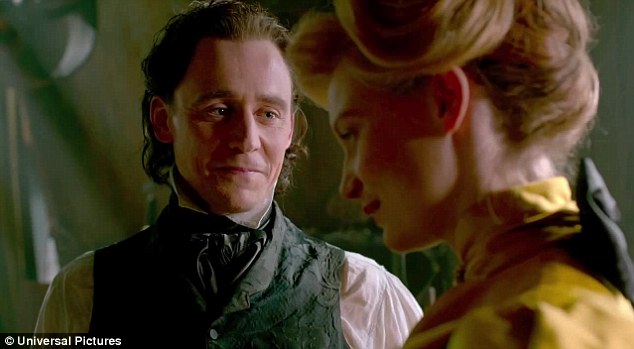
I jump when my toast pops up, so this movie will probably terrify me. But that's okay, because it's Tom Hiddleston. And, as the trailer has promised, he takes off his clothes (I'm a lot more understanding of stuff like Sports Illustrated's swimsuit annual now that so many movies cater to the female gaze). Hiddleston teams up with his onscreen sister-in-law from Only Lovers Left Alive, Mia Wasikowska, general phenom Jessica Chastain, and the guy who said "MAKO" a lot in Pacific Rim in this Guillermo del Toro haunted house movie. With a great cast, great director, and lush Gothic visuals, I'm sure the nightmares will be worth it.

Bonus Upcoming Hiddleston: Loki and the Scarlet Witch will pair up to do Southern accents in I Saw the Light, AND he's also starring in High-Rise.

Using the teaser trailer because of the cover of Nick Cave's "Red Right Hand." Nick Cave is always a plus.

Out: October 16, 2015


Room

Entertain your captive child with Eggshell Snake(tm)!

The "princess locked in a tower" trope is ancient. And while it features in countless fairy tales and video games, it's rooted in the very real fear that if you're a woman, some asshole might kidnap you and imprison you somewhere in order to rape you repeatedly. The Cleveland and Jaycee Dugard cases are just two of the biggest headline-makers of the past few years. These horrors have been reflected in contemporary culture in various ways, including Netflix's Unbreakable Kimmy Schmidt, which creates bright humor out of darkness. Room, by Emma Donoghue, is a thoughtful wonder of a novel. Embracing the challenge of writing a non-cloying child narrator, Donoghue tells the story of two survivors: a young woman who was kidnapped and the son she births and raises in captivity.

I'm sharing the teaser trailer here because the full trailer is kind of an all-over-the-place mess. I hope the movie itself does the book justice.

Out: October 16, 2015


Macbeth

Did you spend all our blood money at Sephora?

If you're Michael Fassbender or Marion Cotillard and also married to either Marion Cotillard or Michael Fassbender, I'm not sure why you would strive for anything else; you have reached peak achievement. Just chill in that French-Irish sea of beauty. But the Macbeths refuse to chill when it comes to the possibility of ruling Scotland in the 1040s, even though it's not like crowns are going to get them indoor plumbing or anything else remotely good. I'm really excited for this. After the disaster of last year's Cymbeline, we need (or at least I want, because I'm greedy) a big, successful Shakespeare adaptation to follow the promise of 2014's blockbuster broadcast of Coriolanus (more Tom, no apologies) and the near-perfect 2013 Much Ado About Nothing. I'm pissed that we're getting this two months after the UK does, in December instead of October. Are they sending an actual reel of the film by dinghy? Maybe they're hoping the Christmas spirit will make Americans more likely to see Shakespeare, even if it's the play containing the famous lines:

Life's but a walking shadow, a poor player
That struts and frets his hour upon the stage
And then is heard no more: it is a tale
Told by an idiot, full of sound and fury,
Signifying nothing.


God bless us, every one!

Out: December 4, 2015  >:(


Batman vs Superman

Oooooooh, Superman's in trouble.

I think all DC fans are on pins and needles for these next two. Like most of the internet, I found the Batman vs Superman marketing pretty laughable (So grimdark! Ben Affleck? What's with the title - is the Kent family farm in a class action against Wayne Enterprises?), but I'm including the above screenshot because that's the exact moment I gained some faith in Batfleck. Seeing him run through Superman-caused destruction to save a small child and then glare at the sky convinced me that this Bruce Wayne is pissed off and motivated enough to really take on the Man of Steel.

Out: March 25, 2016


Suicide Squad

A true gentleman carries a lady when she's trapped in unusable shoes.

The "DC = grimdark" fears were further fanned by San Diego Comic Con footage of Suicide Squad set to morose music, but hopefully David Ayer's film has some actual fun in it. I mean, it is about an off-the-books supervillain task force whose members have names like Captain Boomerang and Killer Croc. But it's likely that a good portion of Suicide Squad's success will depend, fairly or not, on its two most popular characters: Harley Quinn and the Joker. Margot Robbie seems perfect for Harley (this is the character's first live-action appearance), although it's weird that someone born in 1990 will be in a romantic triangle with Jordan Catalano and the Fresh Prince of Bel-Air. There's been a lot of drama regarding both Robbie's and Jared Leto's characters' design (though mostly Leto's), and to be fair, it's pretty easy to imagine Robbie Quinn and Joker Leto re-enacting this scene, though obviously Batman would never let anyone choke to death on their own vomit.

What the dynamic between them will be also has a lot of fans anxious. Interpretations of the relationship can range from "supervillains in love" to "Harley is the poster child for domestic violence." Their relationship origin story has been told various ways in the canon, but I prefer it when Harley's transformation to supervillain Harley Quinn is done by her own initiative. Is a good decision? No, but it's hers. The Adam Glass version in the "new 52" Suicide Squad comics, the most probable source material for the film, is my least favorite. Not only does Harley not have a say in becoming Harley Quinn, she wasn't even deviously planning on a trashy tell-all true-crime book while treating the Joker - her boss was. She does kill her boss and free the Joker when she finds out, but it's done in a sort of fugue state. Weak.

So I've gone on for two paragraphs while barely mentioning any of the other characters/actors, which I feel is going to be pretty typical for this movie. Sorry, guys! Viola Davis will likely be fantastic as boss lady Amanda Waller. Will Smith has the right former-military-precision/soulful-interior look for Deadshot. I'm also looking forward to seeing Catholic gangster supervillain El Diablo (Jay Hernandez) and stereotypical Aussie supervillain Captain Boomerang (Jai Courtney), whom I call Sargent Australia in my head.

Sidenote: I love that we now have a real-life DC villain marriage with Jada Pinkett Smith and Will Smith.

Here's the trailer, which was first seen as leaked SDCC footage. How do you do have a Bee Gees song in a Suicide Squad trailer without it being "Stayin' Alive"???

Out: August 5, 2016

Midsummer Night in Silicon Valley and Hollywood

Puck and Oberon react to a phone (photo by Evelyn Huynh)

A Midsummer Night's Dream has always been my favorite Shakespeare play, and I've gone to performances by Silicon Valley Shakespeare (formerly Shady Shakespeare) for many years, so I had to see their production of Shakespeare in Hollywood, a play about a production of A Midsummer Night's Dream, ASAP. It opened last Friday and runs through the end of August. Written by Ken Ludwig, the work was originally commissioned by the Royal Shakespeare Company.

The set-up is that after the events of A Midsummer Night's Dream, Puck (lively Lucy Littlewood) screws up transporting himself and Oberon (stately Walter Mayes) back to their forest, instead landing them in 1930's Hollywood, where Max Reinhardt's film version of A Midsummer Night's Dream is starting production. The duo soon find themselves cast as themselves in the movie, which is plagued by missing actors, push-back from the studio, and threats of censorship. Puck enjoys the movie star life (especially the Rolexes and sunglasses), and Oberon finds himself falling for the film's Hermia, Olivia de Havilland (April Culver). And, of course, that magic flower makes an appearance and creates some romantic chaos.

How movies get made (photo by Evelyn Huynh)

The script itself is clever and sweet, and SV Shakespeare does a wonderful job with it, doing a lot with their talented cast and small budget. Everyone feels perfectly cast, from our two otherworldly stars to the exasperated Reinhardt (Roger Hooper) and the priggish villain (James Lucas).

Ludwig's version of Reinhardt's production is fictionalized (Reinhardt couldn't speak English at the time, Jean Muir is replaced by a fun character played by Danielle Williams, etc.), but I still wanted to revisit the 1935 movie after leaving the outdoor theater at Sanborn Park. I'd tried to watch it before. Tried. But despite seeing many, many Dream productions of varying quality, the Reinhardt version's hacked-up script and weird acting idiosyncrasies threw me off. And I got through all of A Midsummer Night's Rave.

Bad trip from Midsummer Night's Rave or puppet from the '35 Dream?

But after Shakespeare in Hollywood, I decided to give it another try. It's not on Netflix or Amazon streaming, but you can rent or buy it on YouTube. It's probably at many libraries, too, but I was in a hurry.

When I watched/tried to watch it before, after wincing through the reassembled dialogue of the first scenes, I made it to the fairies' introduction before noping out of there. First we meet Mickey Rooney (already a showbiz vet at fourteen) as Puck in a jarringly rushed and dubbed "whither wander you" scene. Rooney's is an odd performance to watch, because he handles the Shakespearean language so well but his manic over-acting feels amateurish (he "cackles like a drunken hyena at no one in particular" as Film School Rejects put it). I'm guessing this has to do with the state of the craft in the awkward vaudeville/silent film/talkies transitions era. Acting was still adjusting to this new medium.

Then we have the entrance of Titania (Anita Louise), whose prancing, giggling, and high-pitched random sing-songing was off-putting to me, accustomed to more serious Titanias (her speeches on the natural world's confusion and the mother of the baby she's raising are left out and pared down, respectively). "Please just hand Oberon the baby," I silently pleaded as she erratically gamboled, seemingly moments away from an ambulance ride from Coachella. Fortunately, she levels out later in the film.

Pretty as hell, though.

De Havilland and Muir are well cast as Hermia and Helena, but I don't know if the scene establishing their friendship was not filmed or just not in the cut I saw (apparently there are several). Dick Powell doesn't seem quite comfortable as Lysander (he supposedly tried to get out of the role) and Ross Alexander is fine as Demetrius. The traditional cherry-on-top of the play, the Pyramus and Thisbe play-within-the-play, gets short-changed by having the lovers' funny commentary and Theseus's reasoning for seeing it in the first place changed.

I think this film works better as an artifact of 1930s silver screen gorgeousness than as a Shakespeare production, but that might not be entirely fair on my part. Because I know the source material so innately, all of the film's edits and reorganizing stand out to me, creating plot holes and lack of context, but I can't know how the finished product reads to someone new to the story.

Hippolyta is not interested in whatever Theseus has to say.

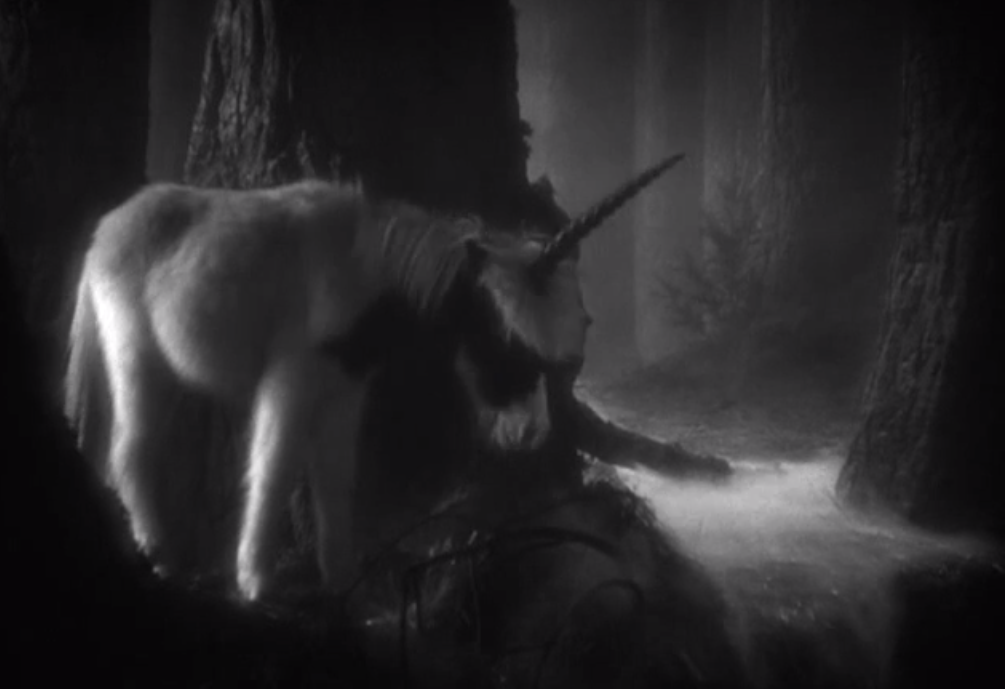
And there were elements I really liked. Mainly: the beauty. The film is composed almost entirely of moments that look like Erte or Mucha at their best. The forest alone is certainly worthy of the "I know a bank where the wild thyme blows" speech. Reinhardt lingers on sylvan scenes of deer, fairies, owls, and flowers all lit by moonlight and fireflies. Without CGI, the special effects are gauzy twinkle-lights and multiple exposures (and a Shetland pony with a unicorn horn headband). Especially impressive are the trains of fairies, including the contested scene mentioned in Shakespeare in Hollywood in which one of Titania's white fairies succumbs to one of Oberon's black fairies (more about that dance here).

As in the 1981 TV movie, this Titania and Bottom (James Cagney) are both so great with the little kids playing fairies that you kinda want them to make it work and have a laid-back fairy family in the woods. Also re: Cagney, seeing the film made me even more impressed with the Cagney and Joe Brown impersonations done in Shakespeare in Hollywood by Shawn Andrei (disclosure: former co-worker from a long time ago) and Erik Browne.

I'm glad I finally finished this A Midsummer Night's Dream, even if it's not the perfect A Midsummer Night's Dream, which probably only exists in my mind. Watch it if you want to see something beautiful and interesting, and see Shakespeare in Hollywood if you're in the Bay Area and want to have a good time.

1935 Oscar Winner: Best Unicorn

Images:
Silicon Valley Shakespeare production photos from their Facebook
1935 A Midsummer Night's Dream screenshots complements of my laptop's print screen button
The Phantom Police Man Proudly Powered by Blogger